The Hidden Math Behind Figure Eight Island's Flat HOA Fee
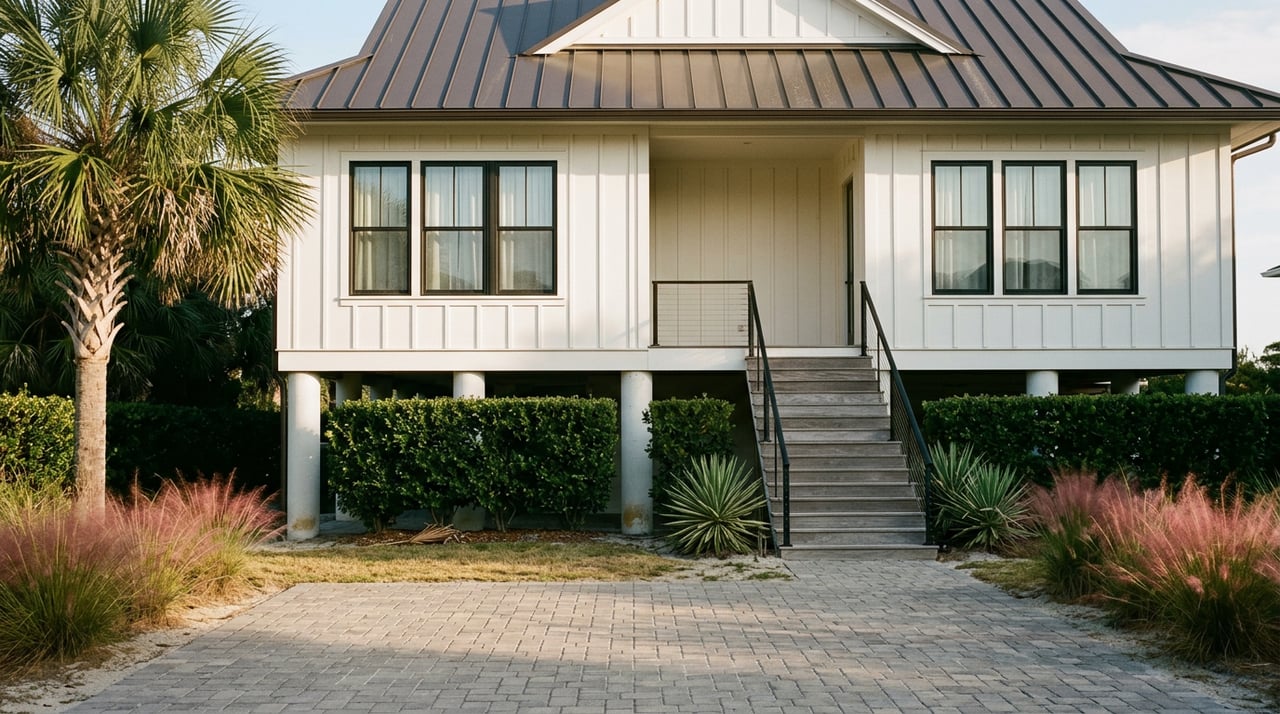
Every homeowner on Figure Eight Island pays the same annual due to the island's homeowners association, whether their lot sits on a shrinking spit of sand near Rich Inlet or on a stable stretch of soundfront a mile away. The bill does not know the difference. The island's shoreline, unfortunately, does.
That single fact, an identical charge attached to wildly unequal risk, explains more about how this island actually works than any price-per-square-foot chart. It explains why a proposed multimillion-dollar shoreline fix collapsed a decade ago. It explains why the island is back to sandbags in 2026 after years of trying to build something more permanent. And it's worth understanding before anyone treats the HOA line item on a Figure Eight listing sheet as just another line item.
Figure Eight Island is private property in the truest sense. The only way onto the roughly 475-home island by land is a single guarded bridge, and there are no shops, restaurants, or hotels anywhere on it. Groceries, dining, and daily errands happen across the causeway in Wilmington or Porters Neck. What residents get in exchange is a genuinely quiet barrier island with its own governance, run by the Figure Eight Beach Homeowners' Association.
That association charges every property owner the same flat annual due, regardless of lot size, home value, or location on the island. Recent listing disclosures put the number at $6,690 a year as of August 2025, with other current figures running closer to $8,900 depending on the parcel and assessment cycle. The due covers guardhouse security, private road maintenance, trash service, and common area upkeep. Yacht club membership, which brings access to the marina, pool, and tennis courts, is a separate cost on top of that, with its own initiation fees and waitlist rules.
For routine operations, a flat fee makes sense. Everyone uses the same guardhouse and the same private roads. But shoreline protection is not a routine operating cost, and that's where the flat-fee model runs into a problem it has never fully solved.
In the mid-2010s, the homeowners association pursued a terminal groin at the island's north end near Rich Inlet, a rock and steel structure meant to slow erosion that was threatening homes there. The U.S. Army Corps of Engineers' environmental review estimated the project would cost $16.9 million to build and maintain over 30 years, protecting 19 homes.
Nineteen homes, out of roughly 475 on the island.
The association proposed funding the project through a special assessment on the membership, and the debate over how to split that cost ran for years. Should owners facing direct erosion risk pay more? Should the cost be spread evenly the way the operating due is? Should it scale with assessed property value instead? There was no clean answer, because a flat per-parcel model works fine when everyone benefits roughly equally and breaks down fast when 4 percent of owners capture nearly all the protection.
In November 2016, the membership voted the assessment down. Geoff Gisler, senior attorney at the Southern Environmental Law Center, which had opposed the groin on environmental grounds, put it plainly at the time:
"The homeowners have made a decision that is not only better for the environment, it's better for their pocketbooks."
The groin never got built. Rich Inlet, which the North Carolina Coastal Federation has long described as one of the most stable inlets on the state's coast, stayed exactly as it was.
Ten years later, the erosion problem hasn't gone away, it has just kept moving. The north end has seen rapid erosion since 2022 tied to an unfavorable shift in the inlet channel, and storms in fall 2025 made it worse. Recent measurements put the erosion rate at somewhere between 5.3 and 11.5 feet a year, based on 2020 survey data, according to Coastal Review's February 2026 reporting.
This year, the state's Coastal Resources Commission approved bigger sandbag structures at Figure Eight properties, the same low-tech tool the island relied on before it ever tried to build a hardened structure. The homeowners association also holds a permit to dredge Nixon Channel, a project expected to yield roughly 250,000 cubic yards of beach-compatible material, with the sand slated to go onto the north end when the dredging happens later this year.
So the island's current shoreline strategy is, functionally, where it started: sandbags and periodic dredging, not a permanent structure. The flat-fee, unequal-risk math that sank the terminal groin in 2016 hasn't changed, and nobody has proposed a different way to pay for a bigger fix since.
If you've looked up Figure Eight Island on any listing platform recently, you've probably seen a startling number: one portal put the median sale price at $5.9 million as of February 2026, down 21.7 percent year over year, while another put it closer to $6.3 million based on 2026 sales data, down about 20 percent over the same stretch. Read as a standalone stat, either version looks like a market cooling fast.
Read against the sales volume, it looks like something else. The island typically has only a handful of homes on the market and closes only a handful of sales in any given stretch, and 2026 listing data show average marketing time running around 127 days, more than double the roughly 57-day national average. When a market moves single-digit sales at a time, one $5 million cottage closing next to one $8 million estate can swing the median by 20 percent without a single seller actually accepting less for a comparable home. The number is real. What it measures is which homes happened to trade, not whether values are falling.
That's a useful lesson for reading any hyper-luxury, low-volume market, and it applies just as much to Figure Eight's neighbors along the Wilmington coastline. A median price on an island this small tells you about the sample, not the trend.
If Figure Eight Island's combination of privacy and access appeals to you, the flat-fee structure and its history are worth putting on your due diligence list alongside the usual inspection and title work. A few questions worth asking directly of the homeowners association before you write an offer:
None of these questions require you to become a coastal engineer. They just require asking the association for its own records rather than relying on what a listing sheet summarizes in one line.
Does the HOA fee ever change based on where my lot sits or how much it's worth? No. The operating due is a flat, fixed amount per property, regardless of location, size, or assessed value. Special projects, like the 2016 terminal groin proposal, are handled through separate votes, and those votes have historically failed when the cost allocation didn't match who benefited.
Is yacht club access included in the HOA fee? No. The marina, pool, and tennis facilities are part of a separate membership with its own fees, and transfer rules vary by property, so confirm this directly with the club rather than assuming it conveys with the sale.
Should a falling median price change how I think about timing a purchase? Not on its own. With only a handful of sales happening at a time, a single closing at either end of the price range can swing the median significantly without reflecting a broader shift. Look at what specific comparable homes have actually sold for, not the headline percentage.
Figure Eight Island rewards buyers who ask good questions before they fall in love with a view. If you're weighing a purchase there, or comparing it against waterfront options in Hampstead, Wrightsville-adjacent Wilmington, or the Topsail corridor, Savannah Holman can walk through what a specific parcel's HOA history, insurance quotes, and shoreline standing actually look like before you write an offer. Let's Connect.

Savannah Holman is a dedicated real estate professional who brings both personal insight and professional expertise to every client relationship. After experiencing the challenges of relocating with her own family through military orders, she developed a passion for making the home-buying and relocation process easier for others. With degrees in psychology and business, a background in corporate sales, and over eight years of real estate success with 500+ transactions, Savannah combines knowledge, compassion, and advocacy to deliver a seamless and positive experience. She is committed to treating every client like her first, ensuring their journey to a new home is both memorable and rewarding.
📍 110 Dungannon Blvd., Ste. 100, Wilmington, NC 28403
📞 (910) 799-3435



The building blocks that Savannah utilized to help create the experience that she wanted for her clients were instilled in her through lessons she learned from her family, mentors in her youth, and early career opportunities. Contact her today to find out how she can be of assistance to you!