Surf City Splits Between Two Counties, and That Split Shows Up on Your Tax Bill
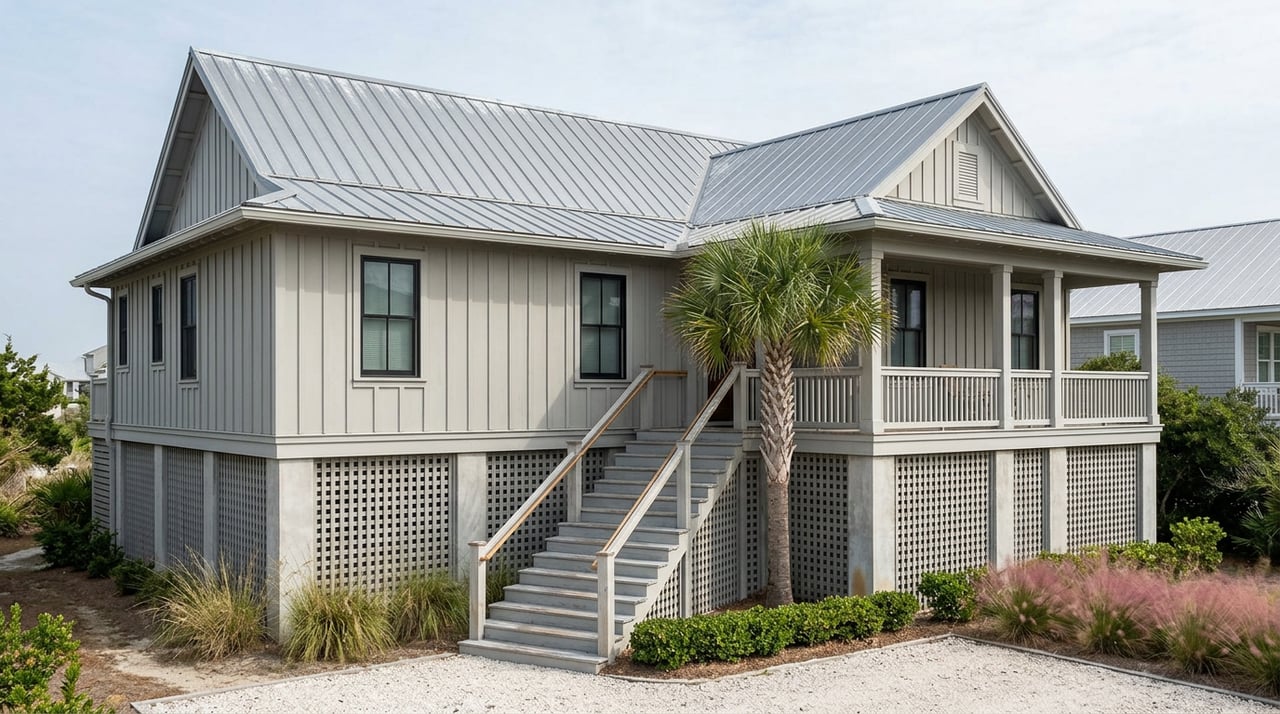
Two rental cottages sit four blocks apart in Surf City. Both are a short walk to the sand. Both list in a similar price range. Both will likely book solid weeks from Memorial Day through Labor Day. If you bought either one as a short-term rental, you would assume the paperwork looks the same on both sides of town.
It does not.
One owner files a single occupancy tax report, mailed or submitted through one town portal. The other owner files two reports with two different offices, on two different systems. The difference has nothing to do with the house, the rental company, or the platform used to book it. It comes down to which side of an invisible county line the parcel happens to sit on.
Surf City occupies the center of Topsail Island, and the town's limits cross directly through the boundary between Pender County to the south and Onslow County to the north. This is not a quirk of the map that only matters for jury duty or voter registration. It changes who collects your rental's occupancy tax and how you handle the filing.
The Town of Surf City levies its own 3 percent tax on rental receipts, and that applies no matter which county the property sits in. Beyond that town-level tax, the two counties handle their own share differently. According to the Town of Surf City's finance office, rental units on the Pender County side owe an additional 3 percent that gets paid to the Town along with the municipal tax, so the property owner submits one combined payment. Onslow County runs its own occupancy tax program, and the Town's finance page states plainly that Surf City does not collect that fee on the county's behalf. Onslow County confirms its own occupancy tax rate is also 3 percent, but owners on that side of the line register and file directly with Onslow County's Finance Office, either by mailing a paper form to Jacksonville or through the county's own online reporting portal.
Add it up and the total local tax burden on a guest's bill lands in roughly the same place either way, close to 6 percent combined between the town and county portions. The rate is not where the two sides diverge. The filing process is.
| Pender County side | Onslow County side | |
|---|---|---|
| Town of Surf City tax | 3%, filed with the Town | 3%, filed with the Town |
| County tax | 3%, bundled into the same filing with the Town | 3%, filed separately and directly with Onslow County |
| Where the county share goes | Earmarked for beach nourishment projects | Deposited into the county's general occupancy tax fund |
| Number of filings | One | Two |
| Filing method | Town of Surf City finance office | Onslow County's own MuniRevs online portal or a mailed form |
The Town of Surf City's finance page is direct about where the money goes on the Pender side: the county's portion funds beach nourishment work, while the Town's own share supports tourism-related activities. Onslow County's occupancy tax page describes its 3 percent levy in more general terms, tied to the county's broader room and lodging tax authority rather than a single earmarked project.
Neither structure is a red flag. Both counties have operated these programs for years, and short-term rentals are common and welcomed in both halves of town. But a buyer who assumes "Surf City" means one uniform process is going to be surprised the first month a compliance letter arrives from an office they did not know they needed to talk to.
It would be reasonable to assume the county line also creates a meaningful gap in property taxes, and that a buyer should simply pick the cheaper side. In practice, the gap is smaller than the paperwork difference. Onslow County's median effective property tax rate runs close to 0.66 percent of assessed value, and estimates for Pender County's effective rate cluster in a similar range, generally landing somewhere between roughly 0.6 and 1 percent depending on the year and the specific parcel. Pender County also completed a countywide property revaluation effective January 1, 2026, which will shift individual assessments regardless of which side of Surf City a home sits on.
The point is not that one county is a bargain and the other is not. It is that the property tax difference between the two sides of Surf City is modest enough that it should not be the deciding factor in where you buy. The occupancy tax filing burden, on the other hand, is a real operational difference.
The county boundary does not stop at tax collection. Floodplain administration in the Pender County portion of Surf City runs through the Pender County Floodplain Administrator's office, a separate point of contact from anything handled purely at the town level. Property assessments, revaluation schedules, and appeals processes also run through two entirely separate county tax administration offices rather than one shared system. None of this changes whether a given property is a good investment. It does mean that "who do I call" has two different answers depending on the address, and a buyer who only asks the Town of Surf City is getting half the picture if the parcel sits north of the line.
A few questions are worth asking before you commit to a Surf City rental purchase, regardless of price point:
State lawmakers introduced Senate Bill 291 in the North Carolina General Assembly in March 2025. As drafted, it would bar cities and counties from banning existing short-term rentals outright, cap local permit fees at $25, and set a statewide floor of two adults per bedroom for occupancy limits. The bill had not become law as of this writing. If it does pass, it would not erase the Pender and Onslow filing difference in Surf City, since that split comes from two counties each collecting their own occupancy tax under existing state authority, not from a town permitting ordinance. But it is worth watching, since any buyer planning a rental strategy around today's fee structure should know the legislative ground is not entirely settled.
Does the county line affect my closing? Not directly. Closing itself runs through the same title and settlement process regardless of county. The county line matters afterward, once you are operating the property as a rental.
Do I need two separate business registrations if I'm on the Onslow side? You need a North Carolina Department of Revenue Certificate of Registration for state sales tax if you take direct bookings, plus registration with Onslow County for its occupancy tax. Neither Onslow County nor the state issues a general business license for this, but both require their own filing.
Is one side of Surf City better for rental income than the other? That depends far more on proximity to the beach, view, parking, and bedroom count than on which county collects the tax. The filing difference is an operational cost, not a market value difference.
Who do I ask to confirm which county a specific address falls in? Both Pender and Onslow County maintain public GIS and tax record lookup tools by parcel, and either county's tax office can confirm jurisdiction by address over the phone.
If you are weighing a rental purchase in Surf City, or anywhere else along Topsail Island, Hampstead, or the greater Wilmington coast, it helps to have someone in your corner who already knows which office to call before you own the problem. Savannah Holman works this coastline every day, from first walkthrough through the first month of ownership. Let's Connect and talk through what a specific address actually requires before you write the offer.
This article is general information, not legal, tax or financial advice. Consult a qualified professional about your situation.

Savannah Holman is a dedicated real estate professional who brings both personal insight and professional expertise to every client relationship. After experiencing the challenges of relocating with her own family through military orders, she developed a passion for making the home-buying and relocation process easier for others. With degrees in psychology and business, a background in corporate sales, and over eight years of real estate success with 500+ transactions, Savannah combines knowledge, compassion, and advocacy to deliver a seamless and positive experience. She is committed to treating every client like her first, ensuring their journey to a new home is both memorable and rewarding.
📍 110 Dungannon Blvd., Ste. 100, Wilmington, NC 28403
📞 (910) 799-3435



The building blocks that Savannah utilized to help create the experience that she wanted for her clients were instilled in her through lessons she learned from her family, mentors in her youth, and early career opportunities. Contact her today to find out how she can be of assistance to you!